RKB Villa
The First Decision
We made the first decision before anything was sourced: this house would not be furnished by quantity. MORIQ had completed rooms generous enough to swallow whatever entered them — so we set ourselves three rules. Few objects, each with enough weight to hold its ground. A short vocabulary of colour, repeated exactly. And emptiness kept on purpose: treated as something we placed, not something left over.
Weight
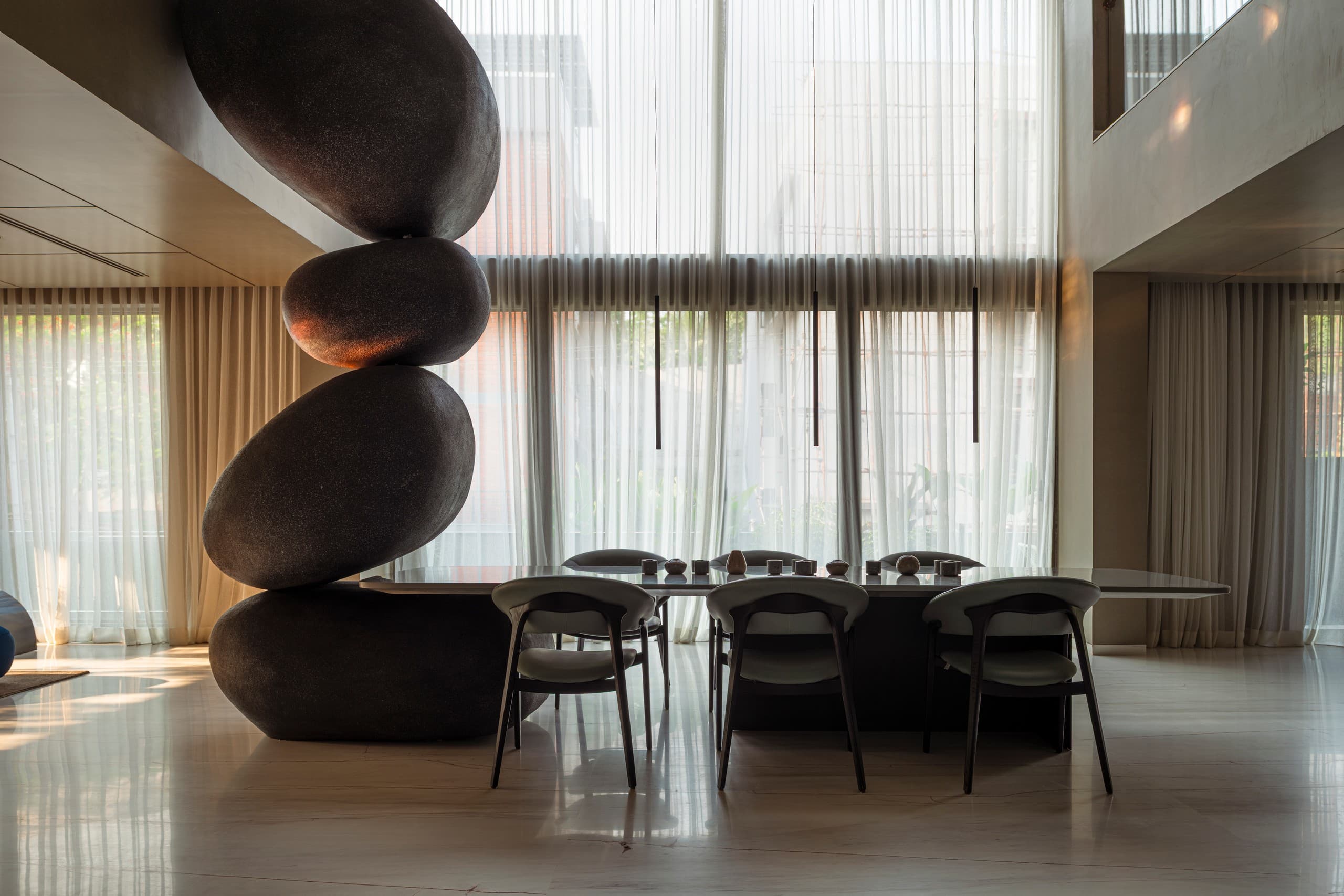
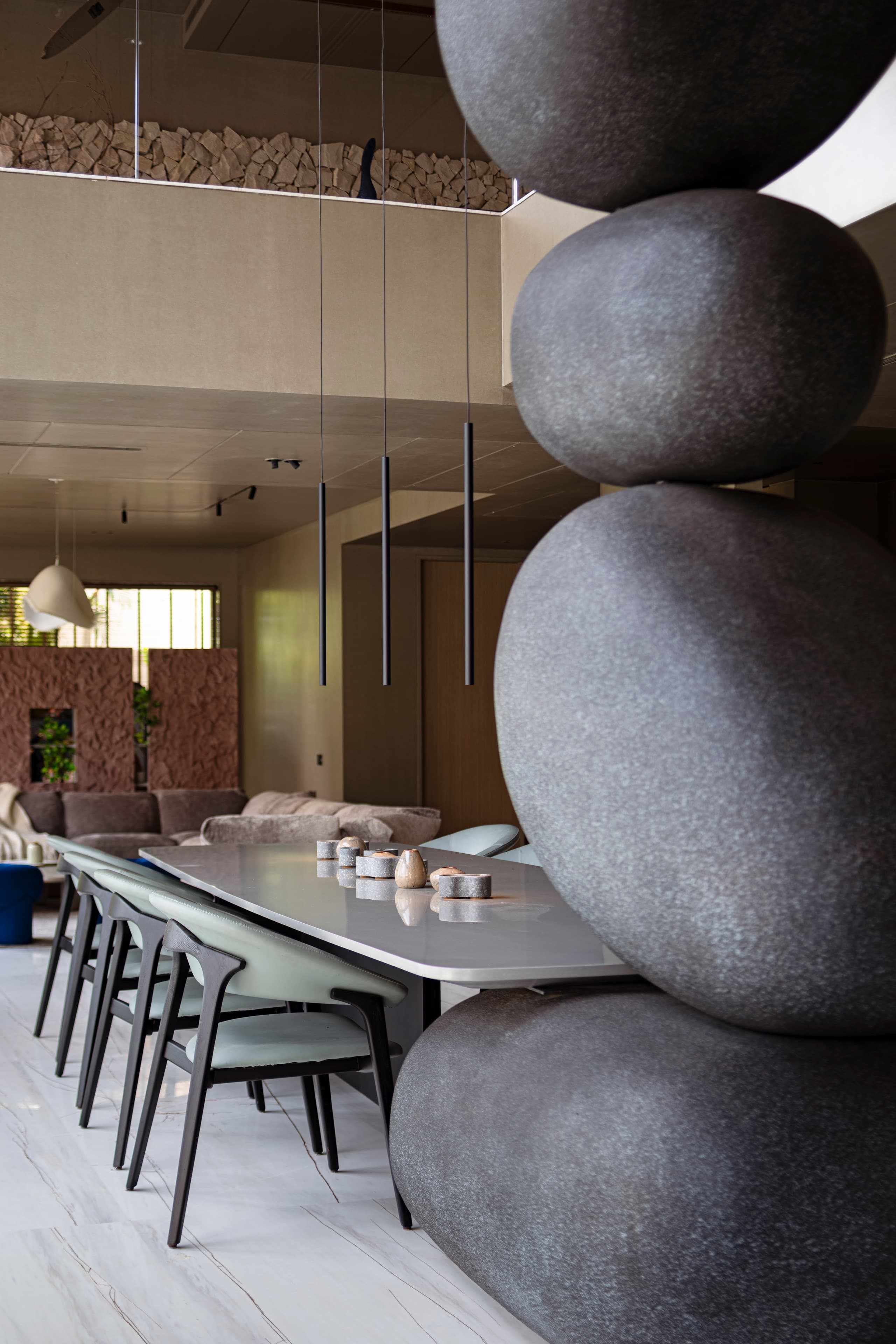
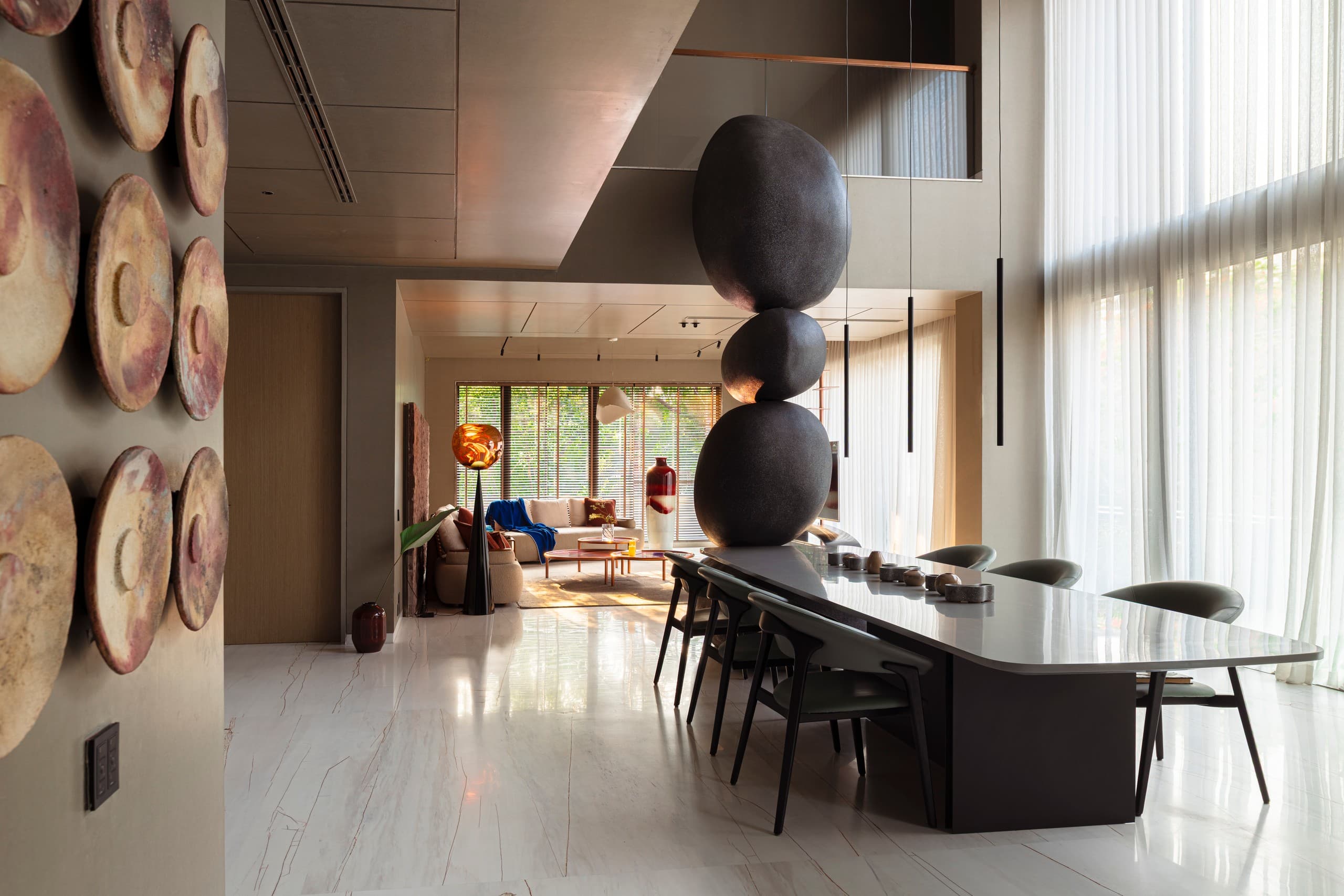
You cannot style a very tall room with small things; they disappear before they are noticed. The dining room needed one object with the scale to answer it — a column of stacked stone forms beside the table, taller than a person, doing quietly what thirty smaller objects would have failed to do. On the table, the same judgment repeats at the scale of the hand: a family of rounded stone vessels, low and unpolished, and nothing else. One material at two scales, so the eye connects them without being told to.
The table never received an arrangement. It received fewer, heavier objects — and the space around them.


Relationships
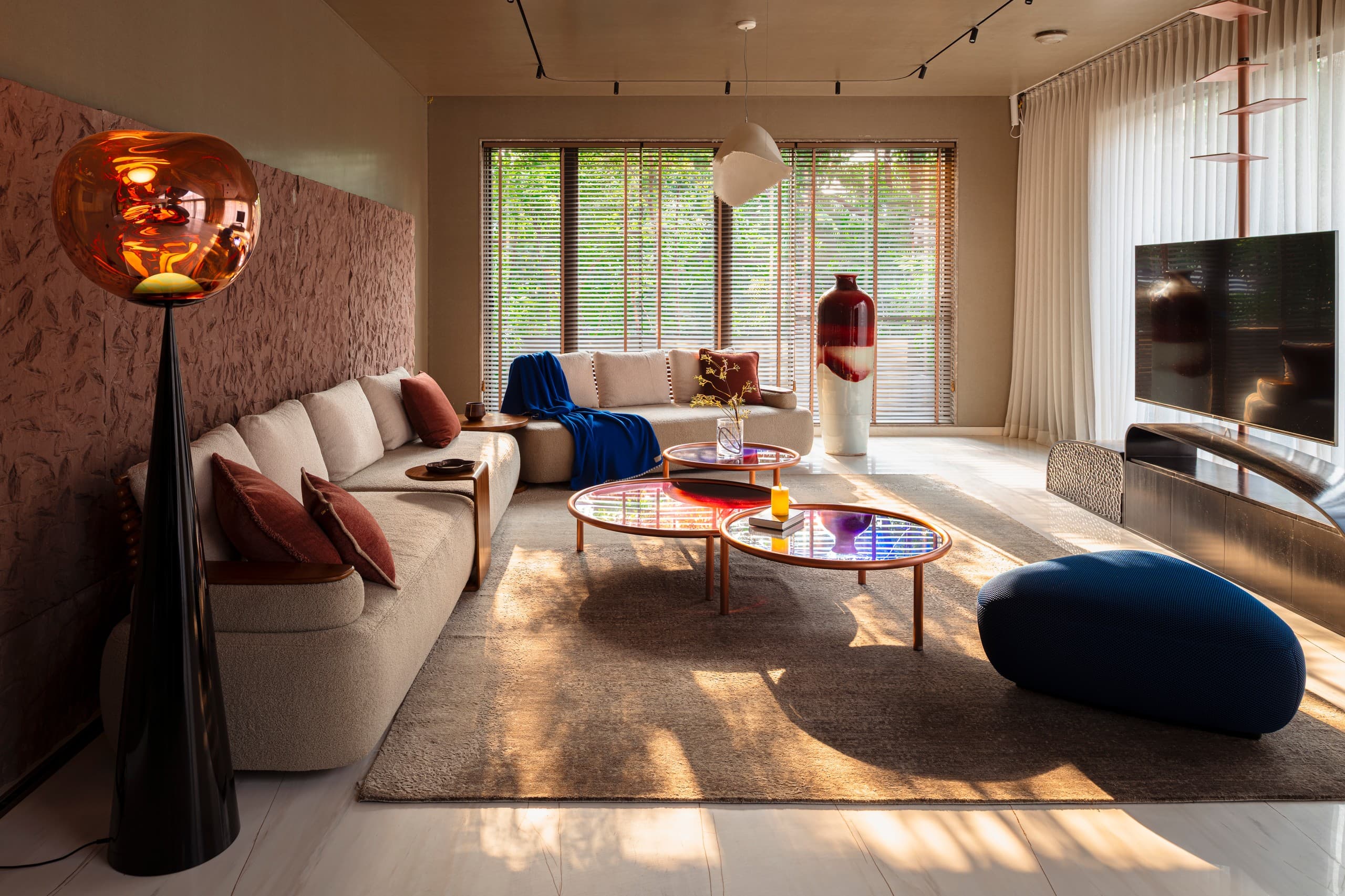
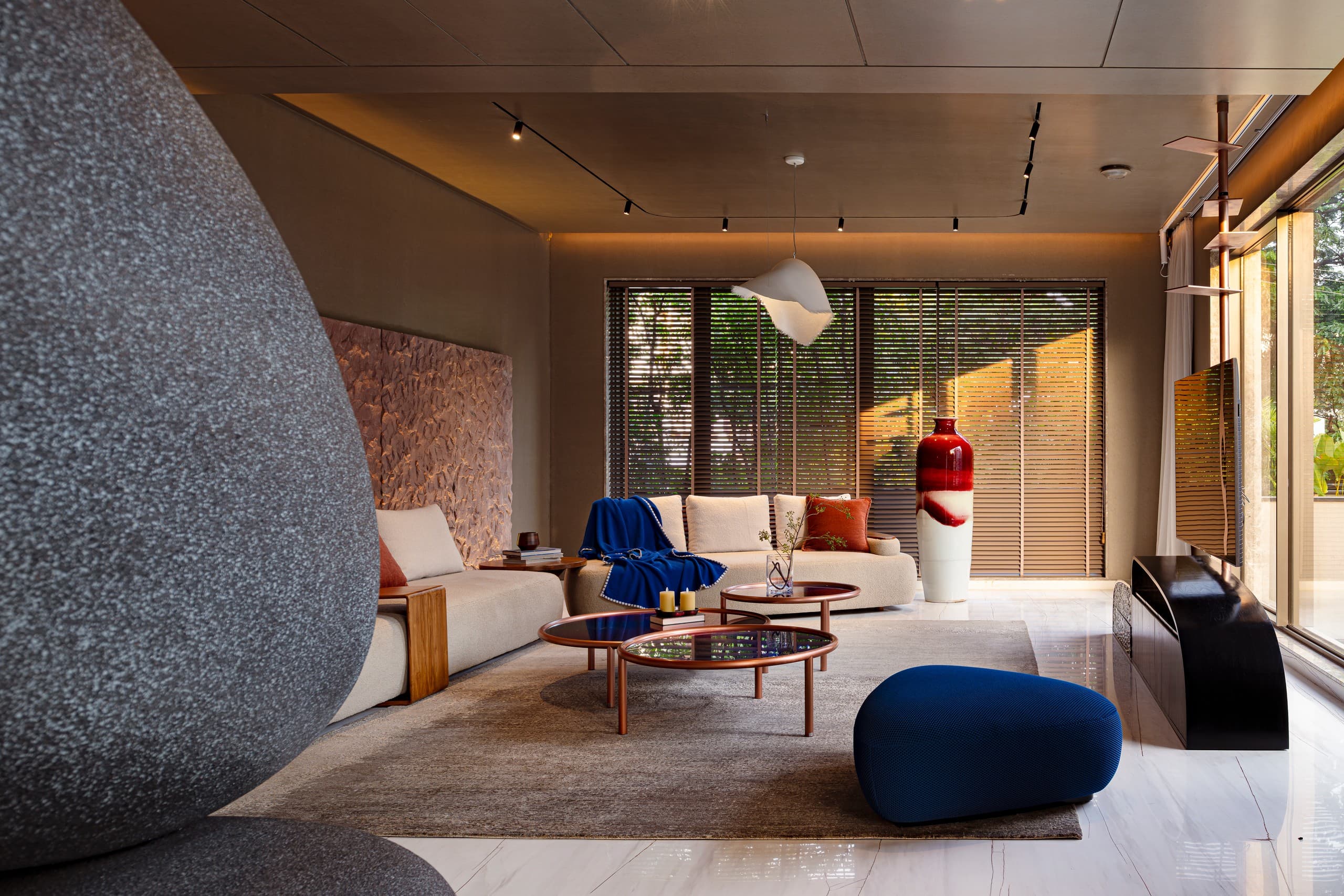
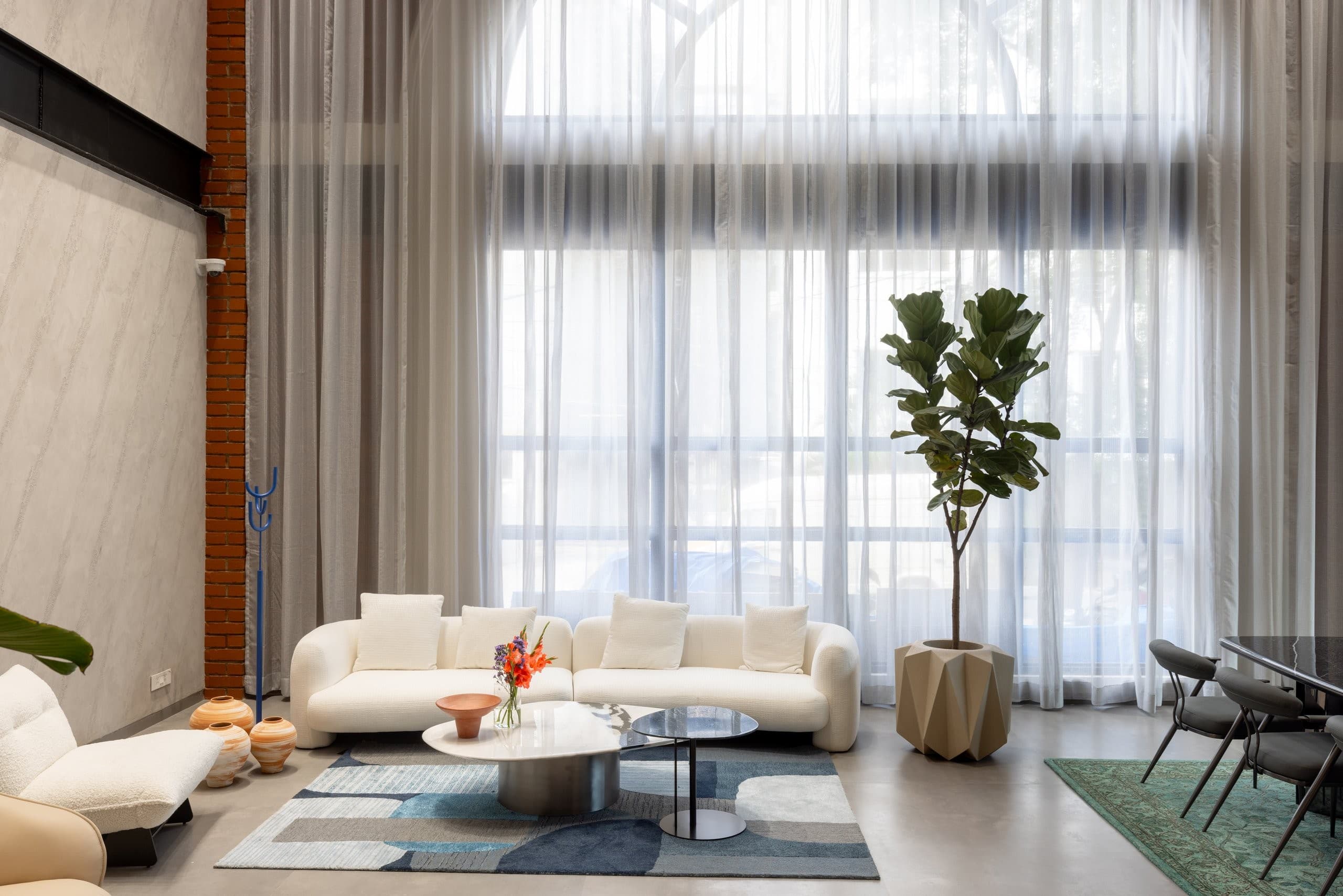
The lounge is composed the way a sentence is written. Ivory seating is the neutral field; nothing on it is allowed to compete. Cobalt enters twice — a throw across the sofa, a pebble-shaped stool — and the two blues hold opposite corners of the composition in tension. Terracotta answers from the cushions and once more in the glaze of a single tall vessel, standing at the window as the room's vertical counterweight. The nesting tables carry their colour in glass rather than on their surfaces, and a copper sphere exists to catch the evening light and keep it. Every object here was judged by what it does to another object. Nothing was chosen alone.
Cobalt appears twice. A third repetition would have turned a relationship into a theme. We stopped at two.


The rooms are not decorated alike; they are related. The same few decisions repeat at different scales, and the house holds together because of it.

Softening
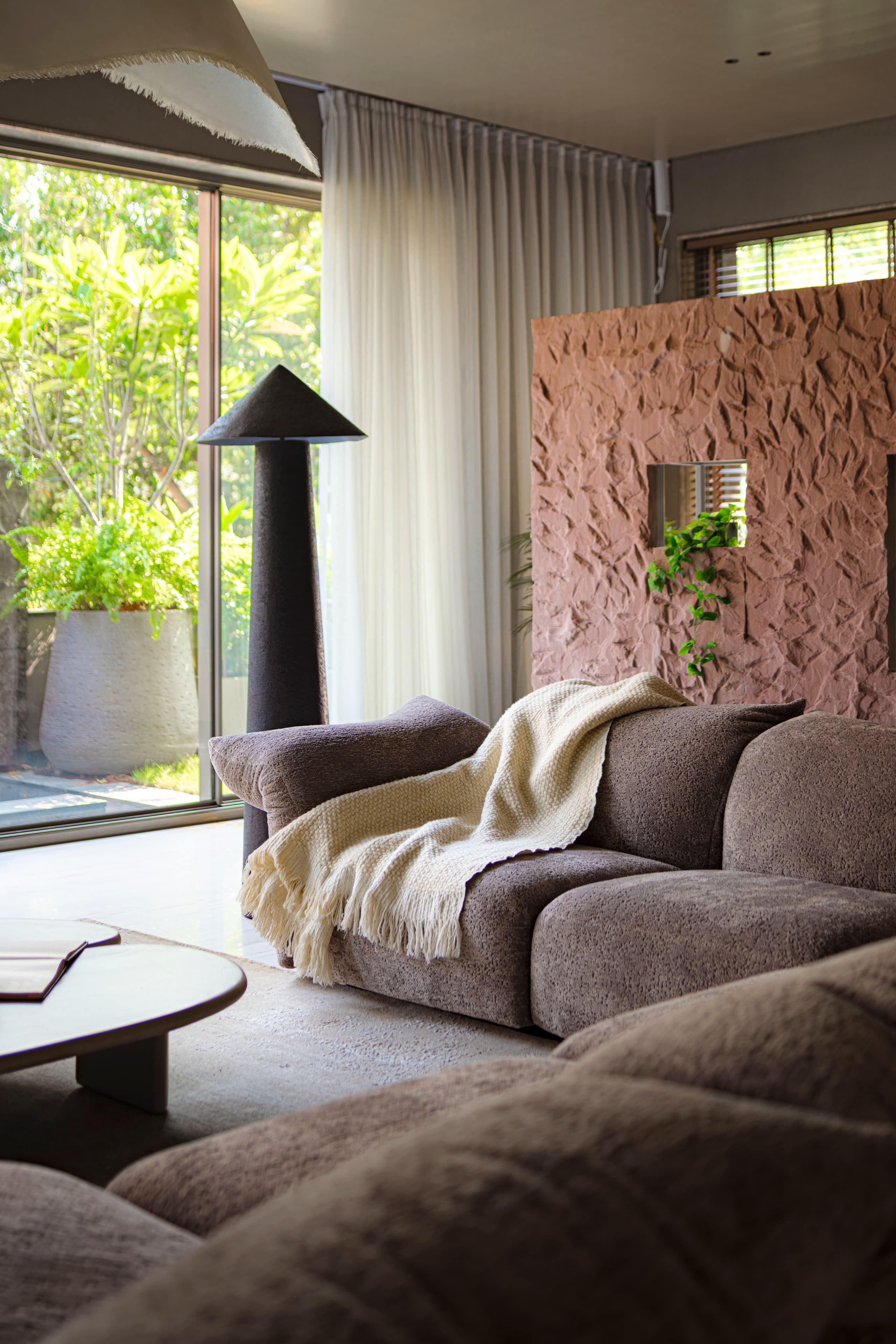
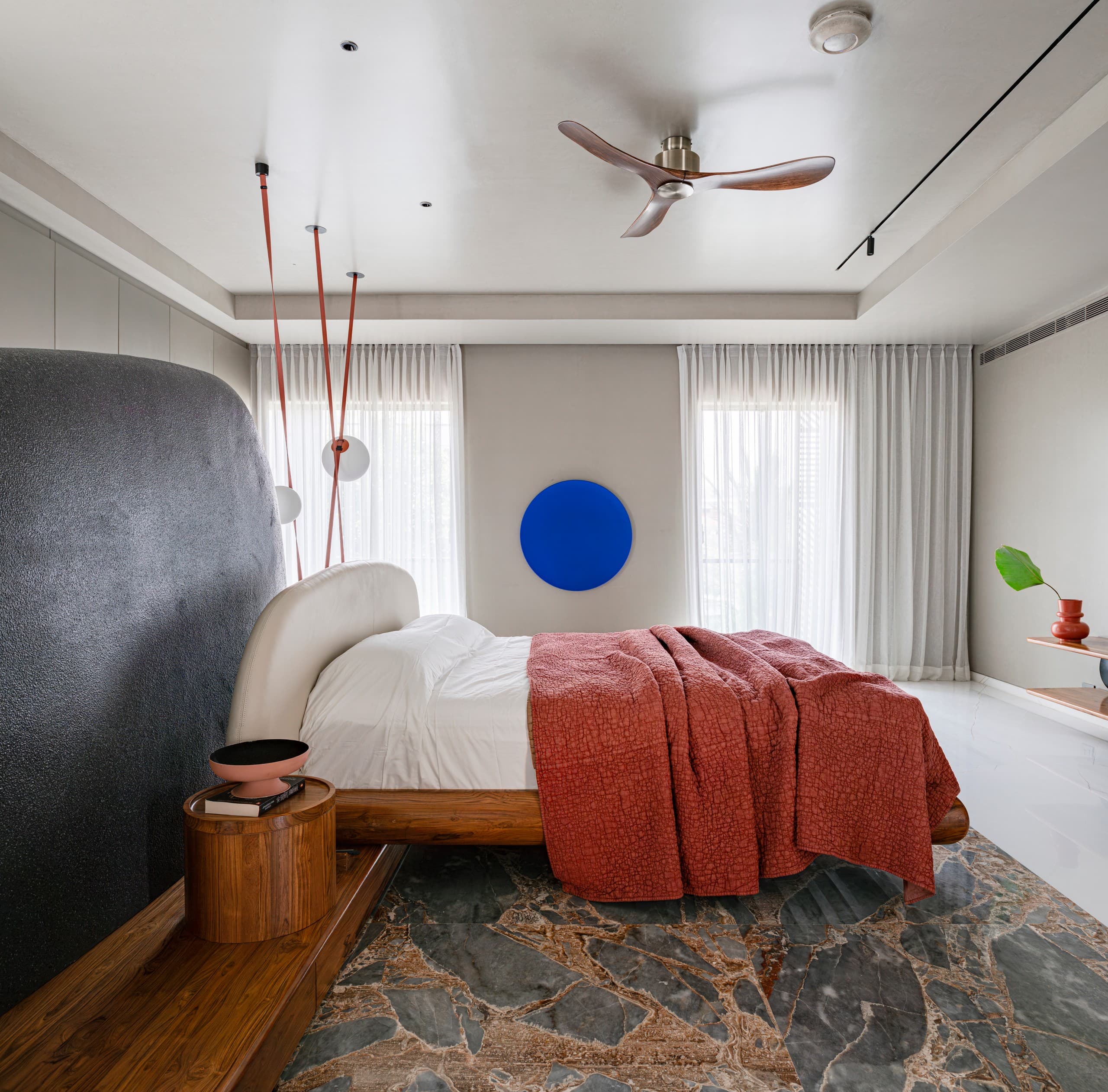
A bedroom asks the same discipline to speak more quietly, and here the work is mostly textile. White bedding under a terracotta quilt, crumpled like dry earth, warms a room that would otherwise run cool. The rug gathers bed and platform into one composition instead of leaving them stranded. And the wall above the bed carries exactly one object — a cobalt disc, the room's only blue. It holds because nothing argues with it. In the sitting corner, bouclé meets hand-textured plaster and the two textures are left to do all the talking: one plant kept in a niche, one dark lamp, and nothing more. Count what is absent; that was the work.
One wall, one object. The emptiness around the disc is not what we failed to fill. It is what we placed.


The Exception
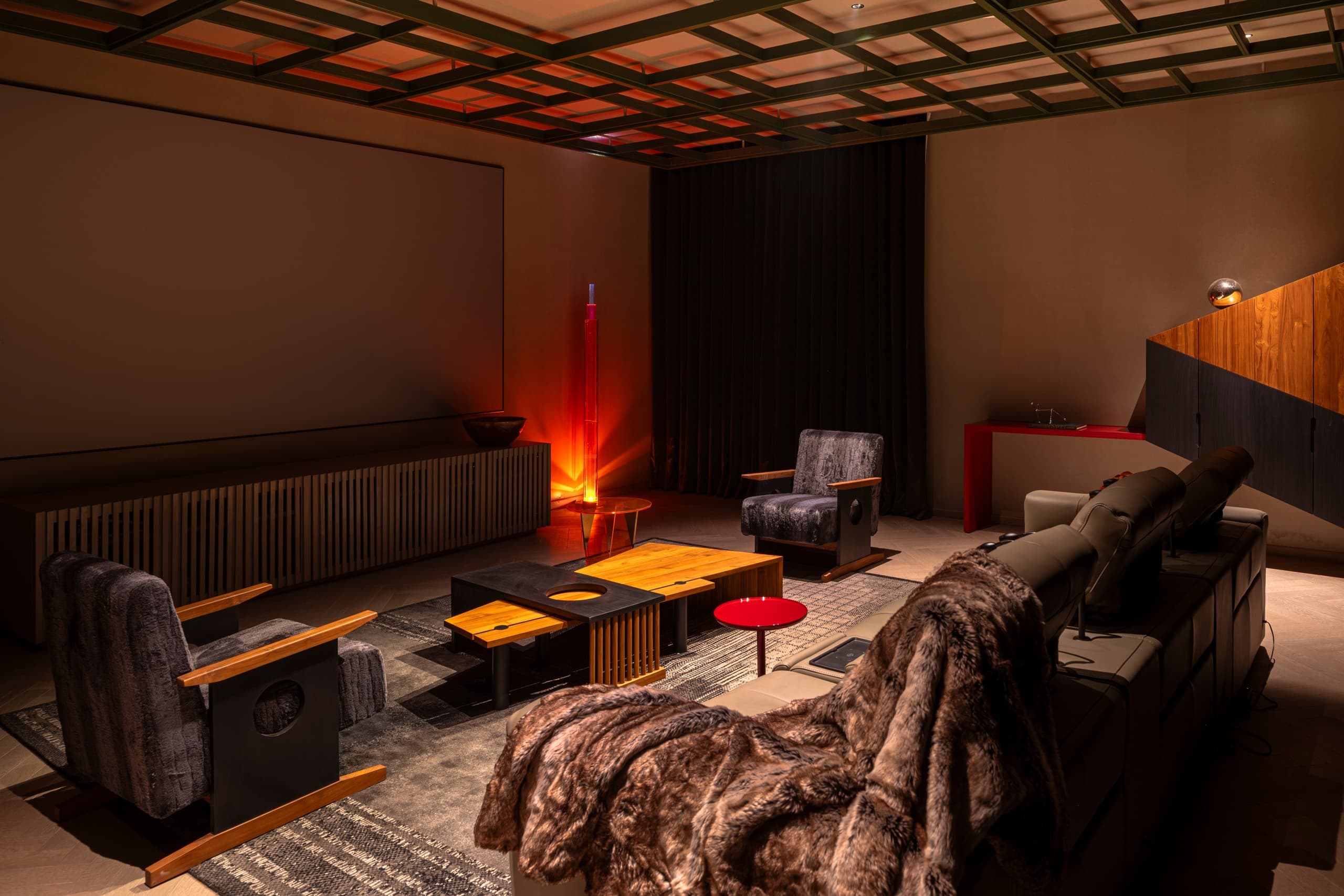
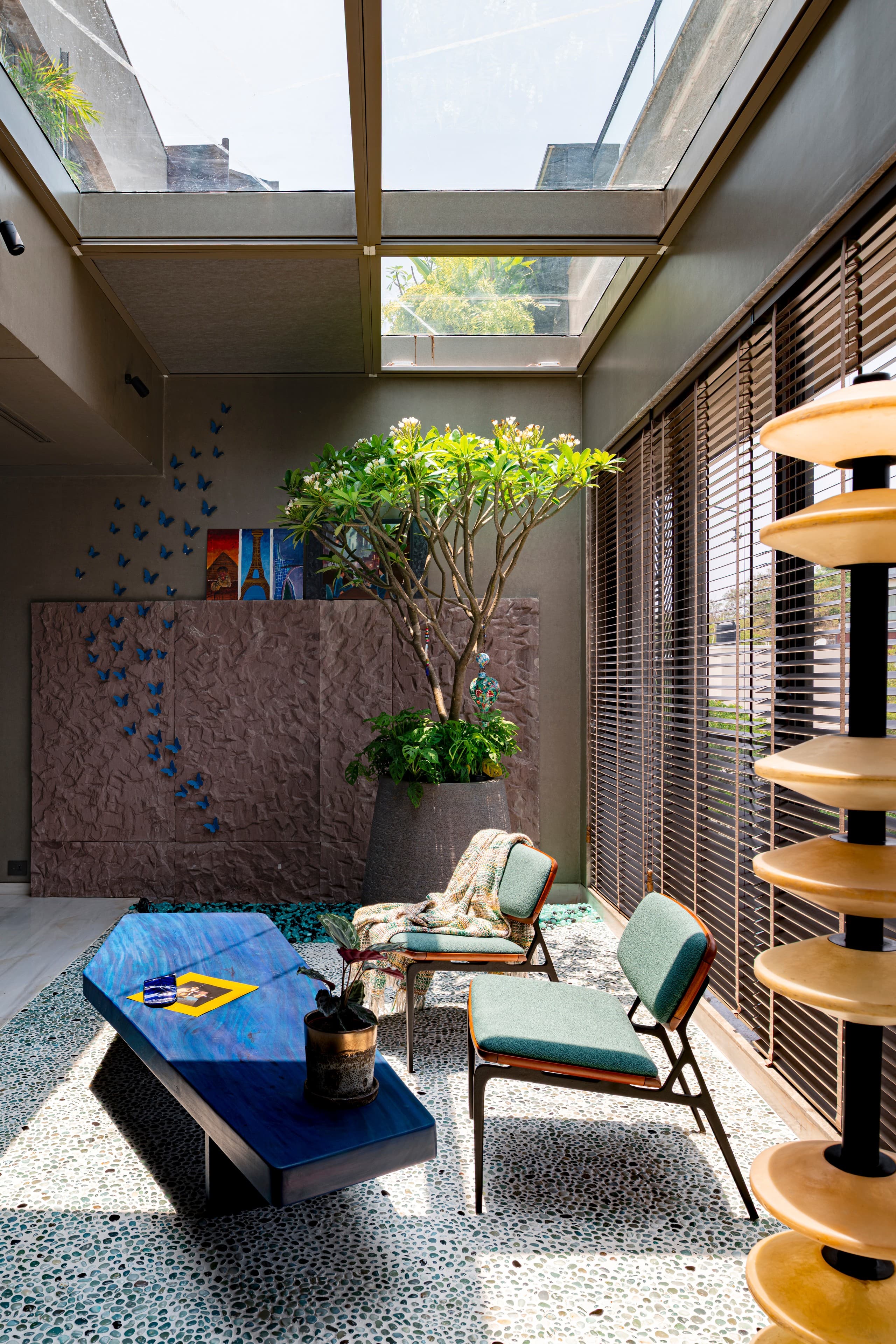
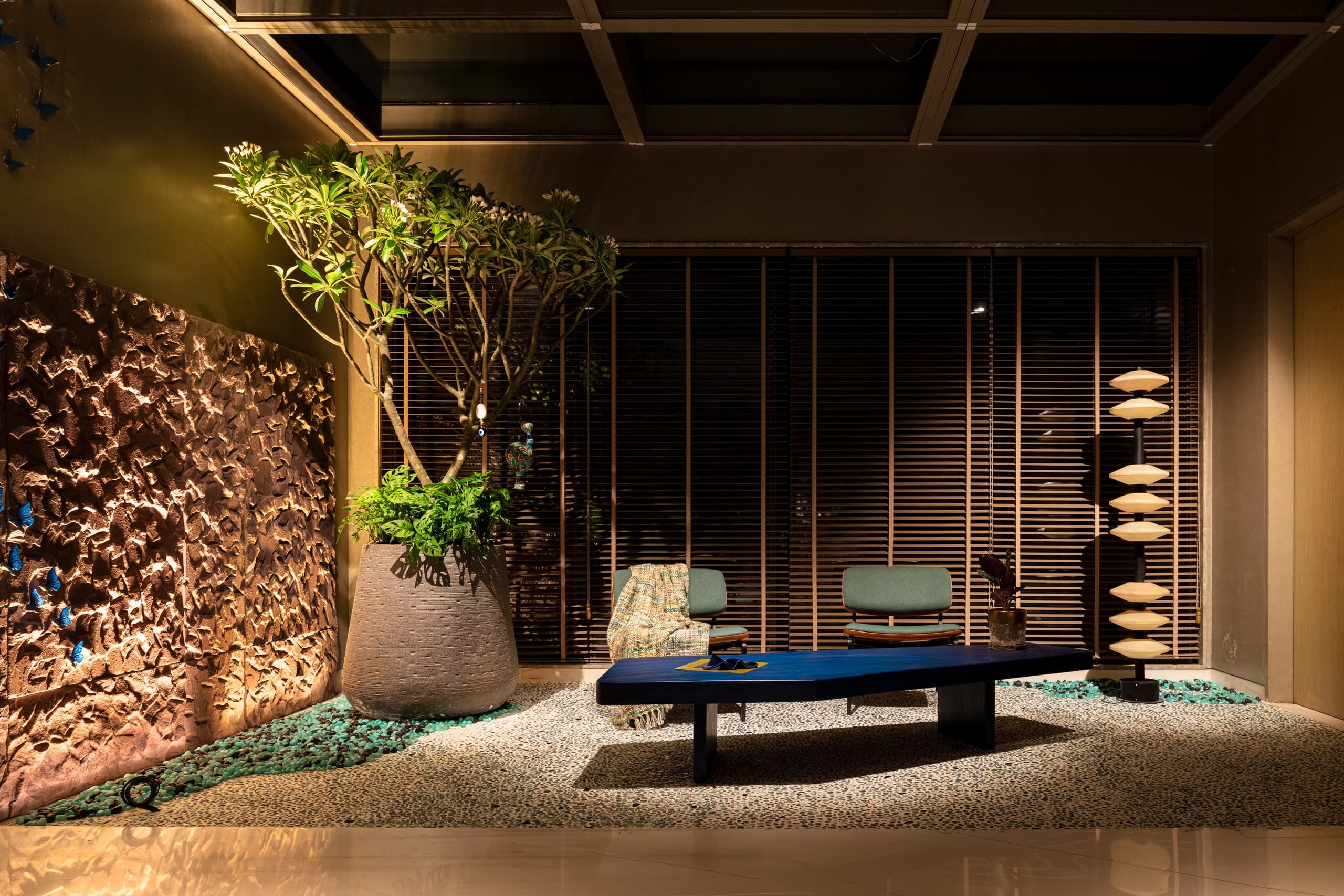
A disciplined house should keep one room where the discipline plays. In the garden room we let it: a blue resin table over a pebbled floor, two quiet chairs, a frangipani in a grey vessel — and a flight of ceramic butterflies climbing the stone wall. It works because it is alone; play repeated becomes noise. The den bends the rules the other way, toward warmth: fur thrown across leather, timber tables interlocked, one column of amber light burning in the corner. Even at its richest, the room holds to a few decisions, each given space to be felt.


The Final Edit
The last pass through this house removed things. What remains at dusk is the measure of the work: one silhouette, a handful of vessels holding the light, colour resting exactly where it was placed and nowhere else. Styling, done properly, is not visible as styling. It is the feeling that nothing could be added — and nothing more taken away.