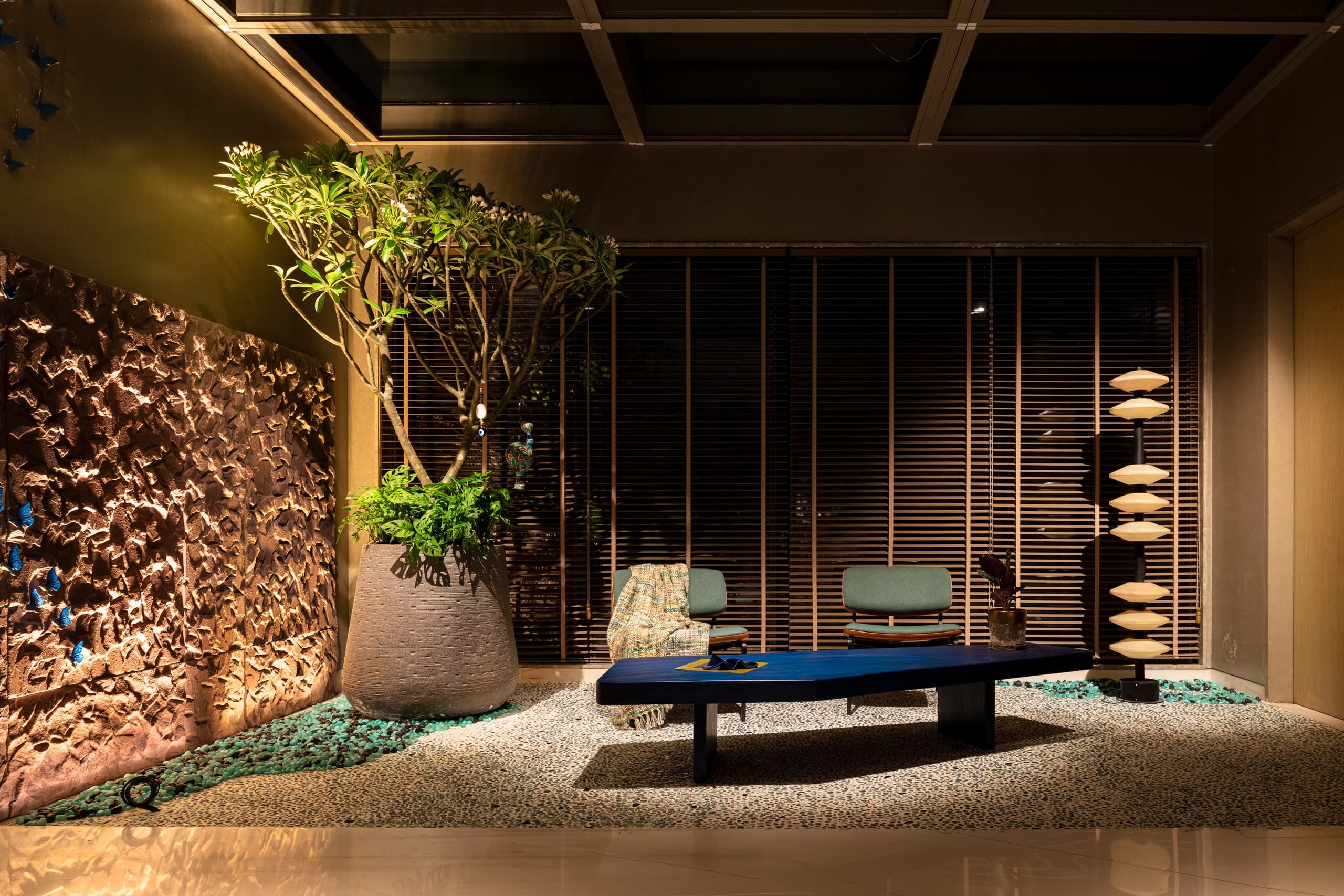
We work after the architecture is complete.
We don't build houses; we reveal them. We are brought in when a space is nearly right and cannot say why it isn't. The answer, usually, is that it holds too much.
We don't decorate. We edit.
A finished interior is not a finished room.
Architecture establishes the room: its proportion, its circulation, its volume, its material language, its relationship with light. When the architecture is good, the room already knows what it wants to be.
And yet there is a moment — after the drawings have been honoured and the last trade has left — when a technically complete interior still does not feel resolved. The answer is rarely another object. Sometimes the scale is wrong; sometimes pieces that are beautiful alone have never been introduced to one another; sometimes what the room needs most is emptiness.
We look at the room compositionally.
The objective is not a room that looks styled. The objective is a room that feels inevitable.
READ PAPER 001 →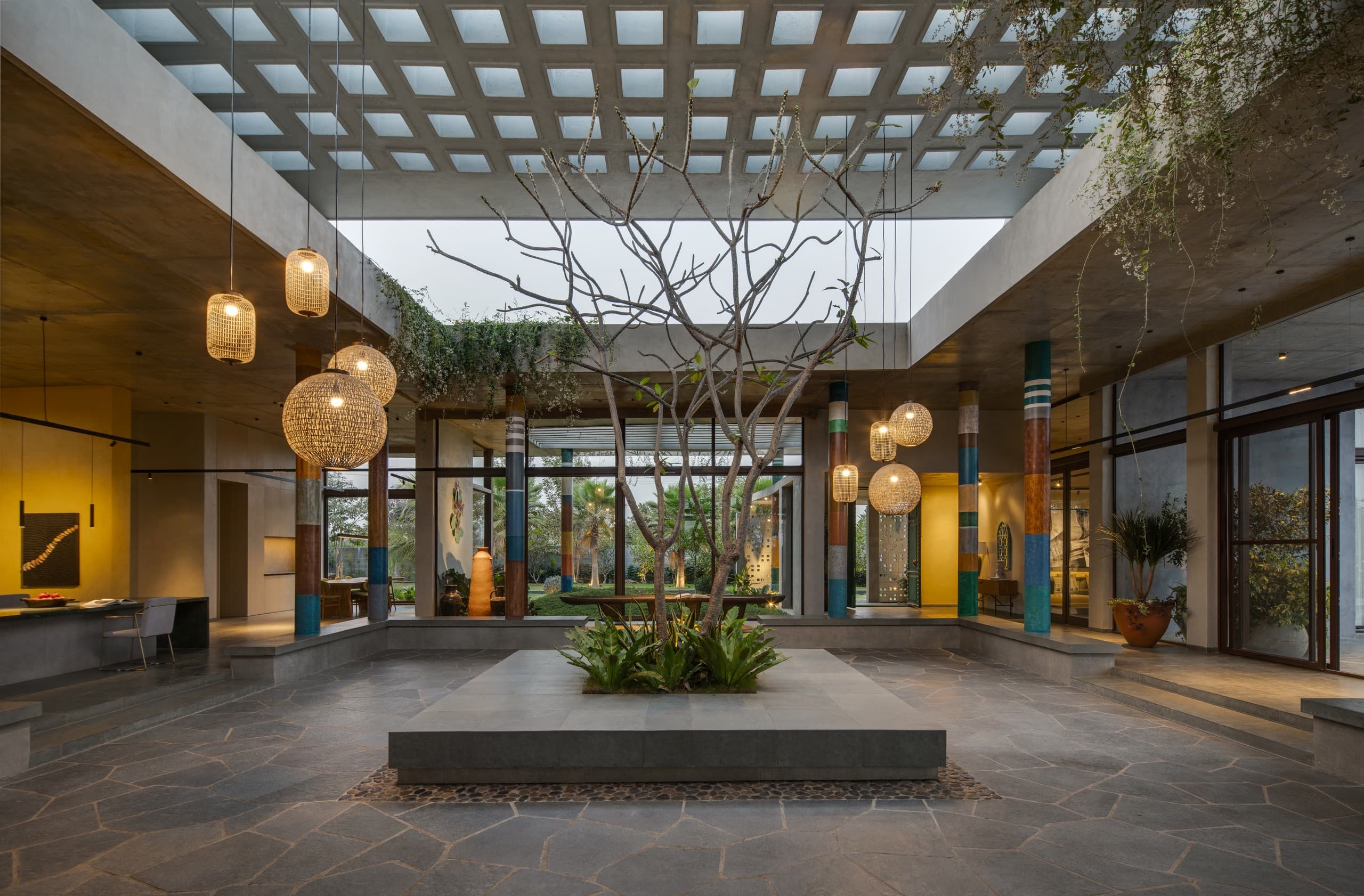
The elements of the final layer.
This is not a list of services. It is what a room is finally made of — and it is considered, always, together.
Scale, placement, proportion. The conversation between pieces, and the distances that let them speak.
Where visual weight is required. Where interruption is required. Where silence should be left alone.
Rugs, curtains, cushions, bedding. The soft layers that give a room its rhythm and warmth, and decide how light lands.
Vessels, books, sculpture, collected pieces. Objects enter selectively. Each must earn its place.
Decorative and atmospheric light as part of the composition: the lamp that gathers a corner, the pendant that brings a ceiling down to human height.
Placement, adjustment, layering, editing. The final composition happens in the room, not on paper.
We do not choose things.
We choose relationships.
We begin by looking.
Not shopping. Not sourcing. Not a specification sheet. We first study what is already true: the architecture and its intent, the light and where it travels over a day, the circulation and the sightlines, the furniture that exists, the objects worth keeping, and the way the people who live there actually live.
Then the editing begins. Some things remain. Some move. Some disappear. Only when the room is understood do we introduce what is genuinely missing — and every selection is made in relation to what stays.
The room is finished when nothing more can leave.
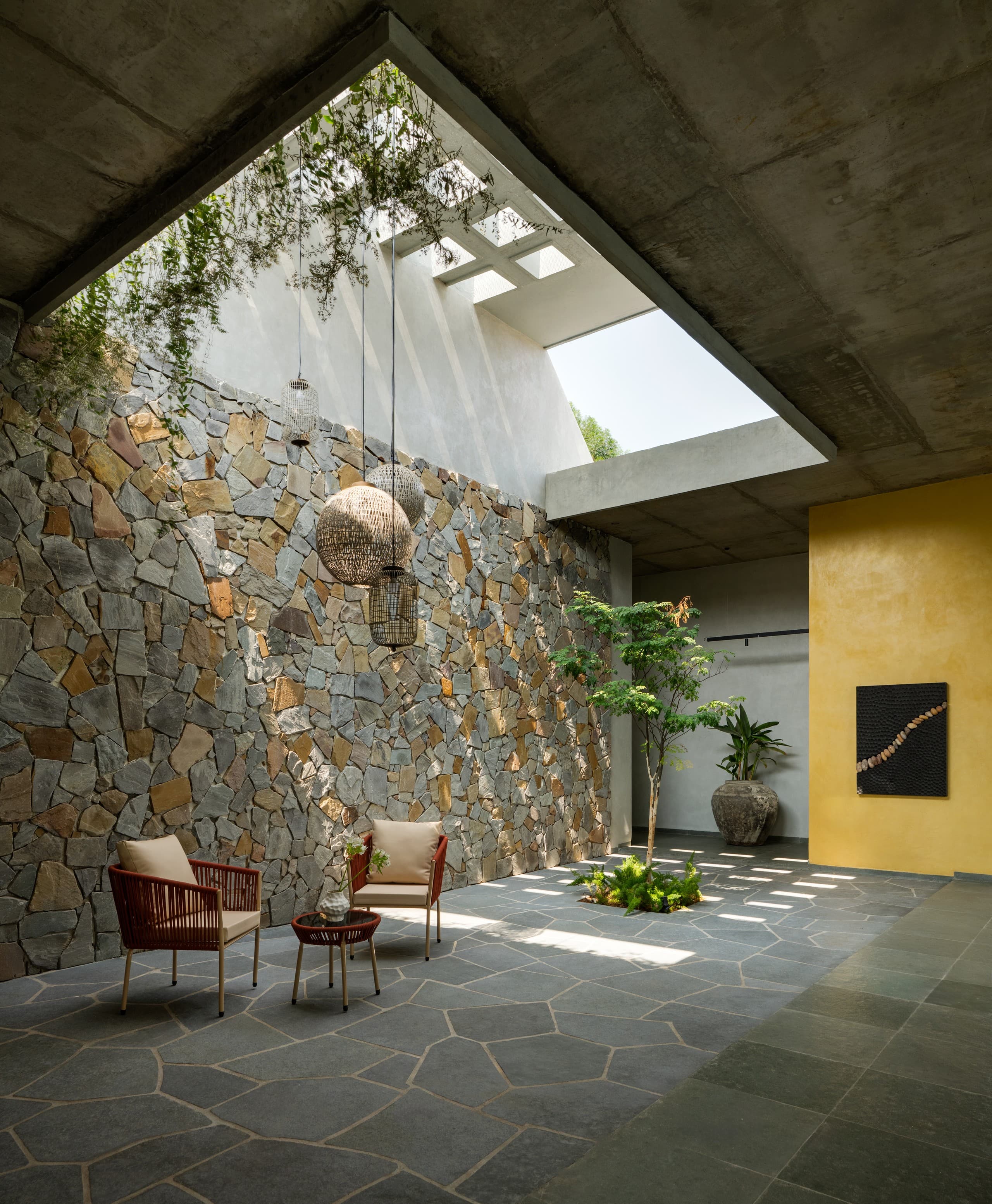
The architecture belongs to the architect.
Style Dialogue is a styling partner, not a competing designer. We enter once the architecture and fixed interiors are established or approaching completion — and our first task is to understand the architectural intent well enough to continue it into the layer where people live.
What enters the building afterwards — furniture, art, textiles, objects, atmospheric light — should reinforce the architecture, not argue with it. Authorship stays clear. The building remains the architect's. Our responsibility is to ensure that what enters it afterwards deserves to be there.
This is not deference. Styling is its own discipline, practised alongside architecture with the same seriousness — and an architect who has seen a good building diminished by what was placed inside it knows exactly why this layer matters.
The emptiest corner often took the most work.
Led by Rubina Mulla.
Style Dialogue is led by Rubina Mulla. Her role is not to impose a recognisable aesthetic on every room. It is to find the character already present — in the architecture, in the people who inhabit it, and in the objects worth keeping — and to edit until those relationships become clear.
The atelier works across private residences and selected collaborations with architects. Each project remains itself. The measure of the work is never that a room looks like Style Dialogue; it is that the room has finally become more completely its own.
The work should disappear.
When we have done our work well, you will not notice the styling. You notice proportion. Calm. Relationship. And the peculiar feeling that nothing could be moved without making the room less itself.
That is where we stop.
If there is a room you keep returning to, wondering what it is trying to become —
IN CONFIDENCE →